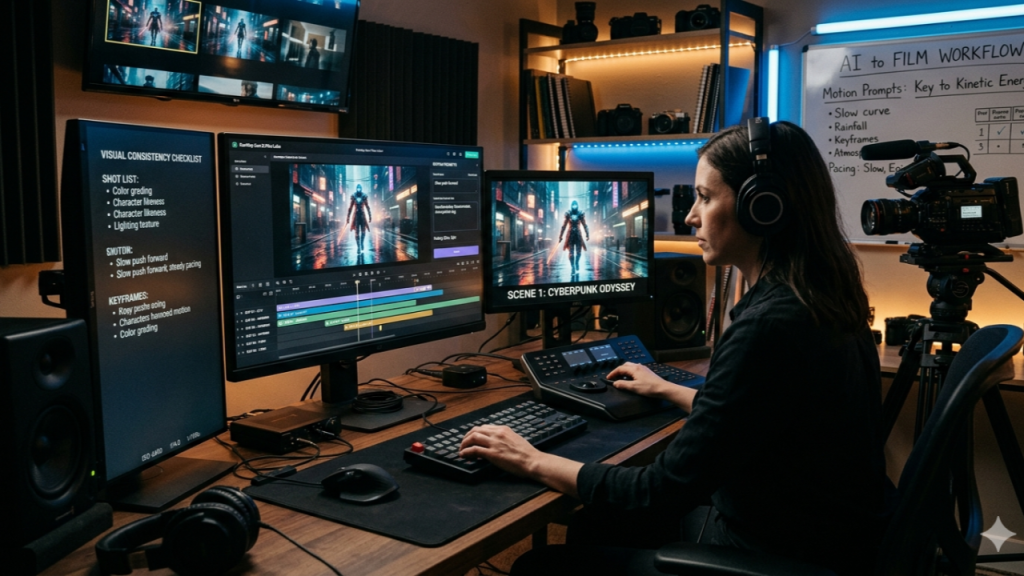
The Future of CGI & AI in Animation
The animation industry is undergoing one of the most significant transformations in its history. The growth of artificial intelligence is transforming the industry in ways that are yet to be fully imagined. Industry experts have predicted that within the next decade, the animation industry will experience drastic changes to the way that content is produced and consumed (McKinsey & Company, 2023).
Real-Time Animation
One of the most anticipated changes to the animation industry is the adoption of real-time animation software. While cloud computing software has drastically cut the time needed to render CGI animations, experts in the animation and gaming software industry have noted that the power of GPUs and AI-assisted rendering software will allow for real-time rendering in the near future (Epic Games, 2023). Companies like Epic have showcased the potential of real-time rendering in Unreal Engine 5, and industry experts predict that by the next five years, the industry will have created software that allows for the production of full-length feature films in real time.
AI-Generated Feature Films
Perhaps one of the most controversial predictions of the industry experts is the production of feature-length films that are created entirely by AI. AI software like Sora and Runway ML can already produce short videos from text prompts, and the quality is rapidly improving (OpenAI, 2024). Industry experts, however, have noted through interviews with AI programmers and developers that within the next decade, AI will be capable of producing a full-length animated feature film from a script without the need for human animators. This may sound like science fiction to many individuals, but the growth of AI capabilities make it a necessity to consider the feasibility of such a topic for future discussion.
Personalised Animation
AI will play a pivotal role in the animation industry in the future in relation to creating personalised animations. With AI algorithms being able to analyse the interests of individuals, the future of the animation industry may produce personalised versions of animations that cater to each individual viewer’s interests (Burgess, 2023). Companies like Netflix have implemented AI software to create personalised content recommendations for each user, and it is only a matter of time before the future of AI personalises the content that is created for its audience.
Virtual Reality & Immersive Animation
The convergence of animation with virtual reality (VR) and augmented reality (AR) is creating entirely new possibilities for the industry. Currently, viewers are restricted to watching animations on a screen, but the future of the industry will allow individuals to step inside the animated world and interact with the characters created with artificial intelligence (Seymour, 2022). Companies like Meta and Apple have invested significantly in the research of technologies that will make this a reality within the next few years.
The Role of Human Animators
Considering the role of AI in the animation industry, many experts have discussed what role human animators will play in the future. Industry experts and analysts have discussed the idea behind AI replacing human animators in most tasks but instead augmenting their capabilities. Human animators will likely have to learn how to work with AI software to manage automation of specific tasks to allow them to focus on the more creative aspects of animation software programs (Kietzmann et al., 2021).
Ethical Considerations for the Future
Finally, experts in the animation industry will likely have to discuss and consider the ethics of AI in their industry in the future. Issues like the copyright of AI animations, deepfakes, and the economic impact on animation workers will raise ethical considerations that must be discussed and regulated by the animation and AI industries (Oppenlaender, 2022). The future of the CGI and AI fields in animation will not just be driven by the technology but by the legal and ethical considerations of their use.
Future Predictions Timeline
The following table below outlines the key developments in CGI and AI in the animation industry and what we can expect from it in the coming years, this is based on the current industry trends and expert forecasts (McKinsey & Company, 2023).
| Year | Predicted Development |
|---|---|
| 2026 | Real-time cinematic rendering becomes mainstream |
| 2027 | AI generates full short films from scripts |
| 2028 | Personalised animated content on streaming platforms |
| 2030 | Fully AI generated feature films become possible |
| 2035 | Immerse VR animated worlds with AI characters |